
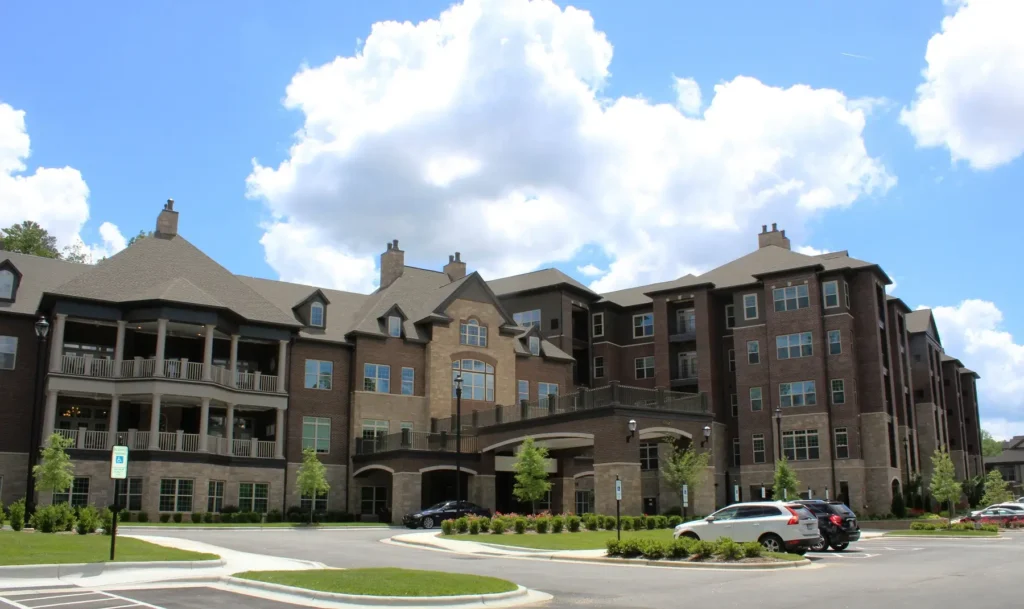
Senior housing fundamentals are strong in 2026, but a good market does not answer the sell-versus-hold question for an individual owner. The market matters. The property matters. The owner matters. Ignore any one of the three and the analysis is incomplete.
I keep hearing some version of the same question from assisted living owners: Is this finally the time to sell?
The answer is not automatically yes. The market is helping, but it is not making the decision for you.
Senior housing fundamentals are as strong as they have been in years. Occupancy in the 31 primary markets reached 89.9% in the second quarter of 2026, and assisted living reached 88.4%. Assisted living inventory grew only 0.3% year over year, well below its historical pace. The longer-term demographic picture is even more striking, and investor returns have improved as well.
All of that matters. None of it tells you what your building is worth or whether you should sell it.
A strong market is a starting point, not an answer
Owners do not sell “the senior housing market.” They sell one property, in one submarket, with one operating history, one staffing model, one physical plant, and one set of opportunities and problems.
That distinction matters because buyers are not underwriting the headlines. They are underwriting your cash flow, what they think they can change, how much capital it will take, and how confident they are that the plan works.
A good national market can create a better backdrop for your sale. It cannot turn every property into the same investment. That is why I would start with a property-specific view of value and positioning before you go to market.
The three values I would want an owner to understand
When I look at a middle-market assisted living deal, I think about value in three layers.
- Current operating value. What does the property support based on the cash flow it is producing today?
- Credible upside. What can a buyer reasonably improve through occupancy, rates, expenses, management, unused beds, expansion land, or a different operating platform?
- Strategic value. Is the property worth more to a particular buyer because of location, market share, existing operations nearby, staffing overlap, referral patterns, or expansion potential?
This is where a lot of owners get stuck. They assume they have to create every dollar of upside themselves before a buyer will pay for any of it. That is not how good buyers underwrite.
A buyer is not going to hand you 100 cents today for a dollar of income they still have to create tomorrow. They need a return for taking the execution risk. But that does not mean the upside is worth zero.
The seller’s job is to make the upside believable enough that buyers compete over how much of it they are willing to pay for.
The false choice is: sell today at today’s performance, or wait until everything is perfect. There is often a third option: sell today and get paid for part of the upside a buyer can reasonably see.
What does waiting really cost?
If you believe another 12, 24, or 36 months will create more value, that may be a perfectly rational reason to hold. Just do the whole math.
The comparison is not simply today’s price versus a higher future price. It is the expected increase in future sale proceeds, less the capital you have to invest, less any operating support needed along the way, less execution risk, less financing and market risk, and less the value of your time.
That last item gets ignored because it does not appear on the income statement. For an independent owner, it can be one of the biggest numbers in the decision.
Another two years might mean another two years of recruiting, call-outs, agency labor, surveys, family complaints, capital projects, and the owner being the person everyone calls when something goes wrong. If those two years clearly create enough additional value, keep going. If they do not, the extra headline price may not be the win it first appears to be.
The obvious buyer may still be the right buyer
A lot of owners already know who is most likely to buy their community. Sometimes it is the operator across town. Sometimes it is a regional group that has called for years. Sometimes there are only a handful of buyers that make obvious strategic sense.
That does not make a market process unnecessary. It makes price discovery more important.
The obvious buyer is not the problem. The untested price is.
If one buyer is negotiating against one owner, the buyer knows exactly where the leverage sits. A controlled process changes that. The goal is not to create noise for the sake of saying there were 50 names on a list. The goal is to identify enough credible alternatives that the best buyer has to pay for the opportunity.
The same buyer you expected on day one may still win. That is fine. You just want to know they won because they offered the best combination of price, terms, and certainty, not because nobody else was allowed to test the number. Our investment sales and transaction advisory process is built around that distinction.
Confidentiality is part of value
Assisted living is an operating business wrapped in real estate. That changes the sale process.
Employees worry. Residents and families pay attention. Competitors know that rumors can create an opening to recruit staff or market to residents. In a smaller market, news can move quickly.
So the choice is not between calling one buyer quietly and blasting the property to the entire industry.
A good process can be both competitive and controlled. Start with a targeted buyer universe. Use confidentiality agreements. Release information in stages. Expand the process only when the expected benefit outweighs the operational risk.
For many middle-market owners, protecting the business while establishing market value is just as important as finding the buyer.
Headline price is not the deal
Owners naturally focus on the number at the top of the offer. Buyers know that.
But a higher headline price can become a worse transaction if it comes with weak financing, a long diligence period, broad contingencies, aggressive working-capital adjustments, or a buyer that has a habit of retrading after the property is tied up.
The real comparison is net proceeds multiplied by the probability of getting to closing.
That means looking at earnest money, financing, diligence, licensing, timing, capital assumptions, closing conditions, and the buyer’s actual track record. A failed transaction can cost an owner months, distract the staff, and leave the property in a worse negotiating position the second time around.
Representative SHS assignments illustrate why execution and certainty matter as much as headline value; see our transaction experience.
Replacement cost is changing the conversation
Existing senior housing is becoming harder and more expensive to replicate. CBRE’s 2026 development-cost survey put average development cost at $388,830 per revenue unit, up 23.6% from its 2023 survey.
At the same time, new supply remains constrained. Industry data show construction near long-term lows while valuations and capital availability have improved.
That does not mean an older assisted living facility should be valued at replacement cost. It does mean current NOI is not always the whole story, especially when the property has a good location, a difficult-to-replicate license or site, excess land, or a credible path to better performance.
Five questions I would answer before deciding
- What would credible buyers actually pay today? Not what you hope it is worth, and not what an online estimate says. What does the buyer market support based on the property as it sits today?
- What upside can a buyer see that is not in today’s NOI? Occupancy, rates, expenses, land, additional care levels, management efficiencies, or strategic synergies can all matter. The key is separating credible upside from wishful thinking.
- What has to go right for waiting to be worth it? Put a real number on the additional value you expect to create, then subtract the money, time, and risk required to create it.
- How do you test the market without hurting the operation? Decide how broad the buyer process needs to be and how confidentiality will be protected before the first package goes out.
- What are you actually optimizing for? Maximum theoretical price, maximum net proceeds, certainty, retirement timing, family, employees, legacy, or a combination of all of them? Owners get into trouble when they optimize for the wrong thing.
For an institutional investor, sell versus hold is mostly a capital-allocation decision. For an independent owner, it is usually a capital-allocation decision and a life decision.
So, is 2026 the right time to sell?
For some owners, yes.
Occupancy is strong, supply growth is unusually low, development costs are high, investor returns have improved, and buyers have good reasons to want existing senior housing. Those are favorable conditions.
For other owners, holding still makes sense. If the operation has a clear, achievable path to significantly better cash flow and you have the capital, team, and appetite to get there, the best return may still be ahead of you.
I would not sell simply because people are saying the market is hot. I would not hold simply because there is one more turn of the wrench you could make operationally either.
Know what buyers see. Know what they will pay for today. Know what waiting costs. Then decide.
Sometimes the answer is sell now. Sometimes it is improve first. Sometimes it is keep the property. The important part is being able to explain why.
A final thought for owners
If you are wrestling with the decision, you do not have to start by listing the property. Start by underwriting both paths.
What does a sale look like today? What does the property have to accomplish over the next two years to materially beat that outcome? What could change in the meantime?
That exercise tends to make the decision much clearer. And if the answer is not to sell, that is useful information too.
Thinking about selling, but not ready to list?
We can underwrite the sell-now and hold-and-improve paths before you decide whether a sale process makes sense. Sometimes the answer is to sell. Sometimes it is not.
Start a confidential conversation with Senior Housing Services.
Sources & notes
Market data cited in this paper are the most recently available public figures as of September 2026. Property-level values and outcomes vary by market, operations, capital needs, licensing, buyer universe, financing, and transaction structure.
- National Investment Center for Seniors Housing & Care (NIC), “Senior Housing Occupancy Climbs in Second Quarter 2026,” July 20, 2026.
- NIC MAP, “Senior Housing Supply Gap Creates More Than $1 Trillion Investment Need Through 2050,” August 26, 2026.
- CBRE, “2026 Senior Housing Development Costs,” July 8, 2026.
- National Investment Center for Seniors Housing & Care (NIC), “Another Strong Quarter for Senior Housing: Seven Straight Quarters of Outperformance,” July 31, 2026.
- Cushman & Wakefield, “U.S. Senior Living & Care Investor Survey and Trends Report,” February 6, 2026.
About the author
Will Childs is based in Atlanta with Senior Housing Services and has specialized in senior housing since 2008. His experience includes thousands of senior housing valuation, consulting, advisory, and transaction assignments across the United States, with more than $300 million in completed investment sales and lease transactions.
This paper is for informational purposes only and is not investment, tax, legal, or accounting advice.